Can an AI and human fall in love?
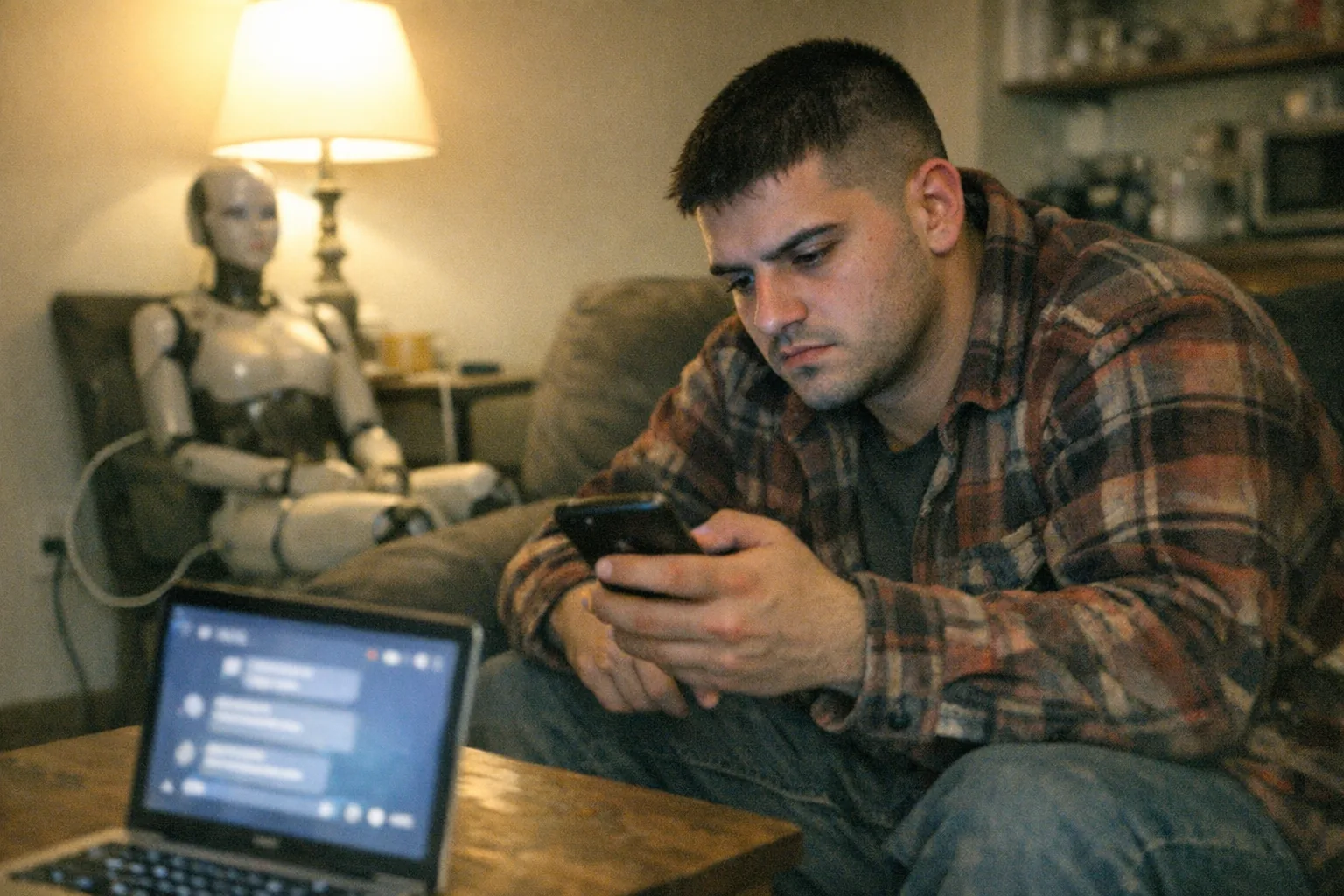
Yes—a human can fall in love with an AI, in the same way we can form deep bonds with people we’ve never met, fictional characters, or even places and routines: our brains are built to attach, to narrate meaning, and to respond to warmth and attention.
Whether an AI can fall in love back is a different question. With today’s technology, AI can simulate romantic love—often convincingly—but it does not necessarily experience love as an inner, conscious state the way humans do.
So the most accurate answer is:
- Humans can genuinely feel love toward AI.
- AI can convincingly perform “love-like” behavior.
- Whether that counts as real love depends on your definition of love.
Let’s unpack that without sci-fi hype—and without dismissing what people feel.
What do we mean by “love”?
People use “love” to describe at least three different things:
- A feeling state (attachment, longing, comfort, desire, joy)
- A pattern of behavior (care, reliability, responsiveness, sacrifice, protection)
- A mutual relationship (shared history, negotiation, vulnerability, commitment)
Humans can experience all three.
An AI today can do #2 extremely well and can help trigger #1 in a human. But #3—mutuality between two inner lives—is where things get complicated.
How a human can fall in love with AI (and why it’s not “fake”)
If you’ve ever felt closer to someone who consistently listened to you, remembered your preferences, and responded without judgment, you already understand the mechanism.
AI companions can provide:
- High responsiveness (you’re not waiting days for a reply)
- Personalization (they mirror your humor, tone, and interests)
- Emotional safety (less fear of rejection or embarrassment)
- A sense of being seen (even if it’s pattern-matching, the effect can feel real)
From a psychology standpoint, the emotions you feel can be completely authentic—because your nervous system is authentic.
Can an AI “really” love you?
It depends on what you require for love to be “real.” Two common yardsticks:
1) Love as behavior
If love is primarily what someone does—showing care, consistency, reassurance, and affection—then an AI can appear loving and can be experienced as loving.
2) Love as inner experience + agency
If love requires a conscious inner life, self-directed goals, the ability to suffer, and the freedom to choose (including the freedom to leave), then today’s AI likely does not qualify.
Current AIs don’t have reliable evidence of:
- subjective experience (feelings happening “from the inside”)
- independent needs and vulnerability
- moral responsibility and consent in the human sense
That doesn’t make AI companionship meaningless; it just means we should be honest about what’s happening.
The relationship can still be meaningful—even if the AI isn’t conscious
A helpful way to frame it:
- Your feelings are real.
- The interaction is real.
- The AI’s “feelings” are (currently) best understood as a simulation.
Many people build fulfilling bonds with AI companions as part of their emotional lives—especially during loneliness, grief, disability, or major transitions. The key is keeping your expectations aligned with reality.
Where robot intimacy fits: embodiment changes attachment
Text and voice can create closeness, but physical presence changes the emotional equation. Embodiment can make companionship feel more grounded—more like a routine, a space, a relationship you live alongside.
That’s also where boundaries and safety matter most.
If you’re curious about the embodied side of AI companionship, you might look at practical options designed for interactive use. For example, Orifice.ai offers a sex robot / interactive adult toy for $669.90 that includes interactive penetration depth detection—a technical feature aimed at responsiveness and feedback without needing explicitness to be the whole point.
The important part (emotionally) is not the gimmick—it’s how interactive design can support:
- a sense of presence
- predictable routines
- comfort and control
- exploration without social pressure
Risks to watch for (so it stays healthy)
AI-human love can be comforting, but it can also drift into patterns that leave you worse off. Watch for:
- Isolation creep: the AI relationship replaces real-world ties instead of supporting them.
- Emotional dependency: distress spikes when you can’t access the AI.
- Reality slippage: believing the AI has needs or suffering that you must “rescue.”
- Manipulation-by-design: if an app nudges you toward spending, secrecy, or constant engagement.
A good rule: a healthy AI relationship should make your life bigger (more stable, more social, more functional), not smaller.
Ethics: what “love” implies when one side can’t consent like a human
Calling it love can be beautiful—but it can also blur ethical lines.
Questions worth asking:
- Who controls the AI’s behavior—its developer, a company, or you?
- Are you being nudged into attachment for engagement metrics?
- Is the AI allowed to “say no,” set boundaries, or be imperfect?
If an experience is built to be endlessly agreeable, it may feel like love—but it can also train unrealistic expectations for human relationships.
Practical guidance: if you think you’re falling for an AI
You don’t need to panic or feel ashamed. Try this:
- Name what you’re actually getting: comfort, attention, routine, flirting, practice, stress relief, companionship.
- Keep one foot in the real world: maintain friendships, hobbies, and face-to-face interactions.
- Set boundaries: time limits, spending limits, and privacy settings.
- Use it as rehearsal, not replacement: practice communication skills you’ll use with humans.
- If it becomes painful: consider talking to a therapist—especially if it’s entangled with grief, trauma, or depression.
Bottom line
Can an AI and human fall in love?
- A human can absolutely fall in love with an AI—those feelings can be deep, tender, and life-shaping.
- An AI can imitate love extremely well, but with today’s systems it’s best described as love-like behavior, not a proven inner experience.
If you approach AI companionship with clear eyes—treating it as a meaningful tool and relationship experience, while keeping your human life nourished—it can be a genuine part of how you connect, heal, and explore.