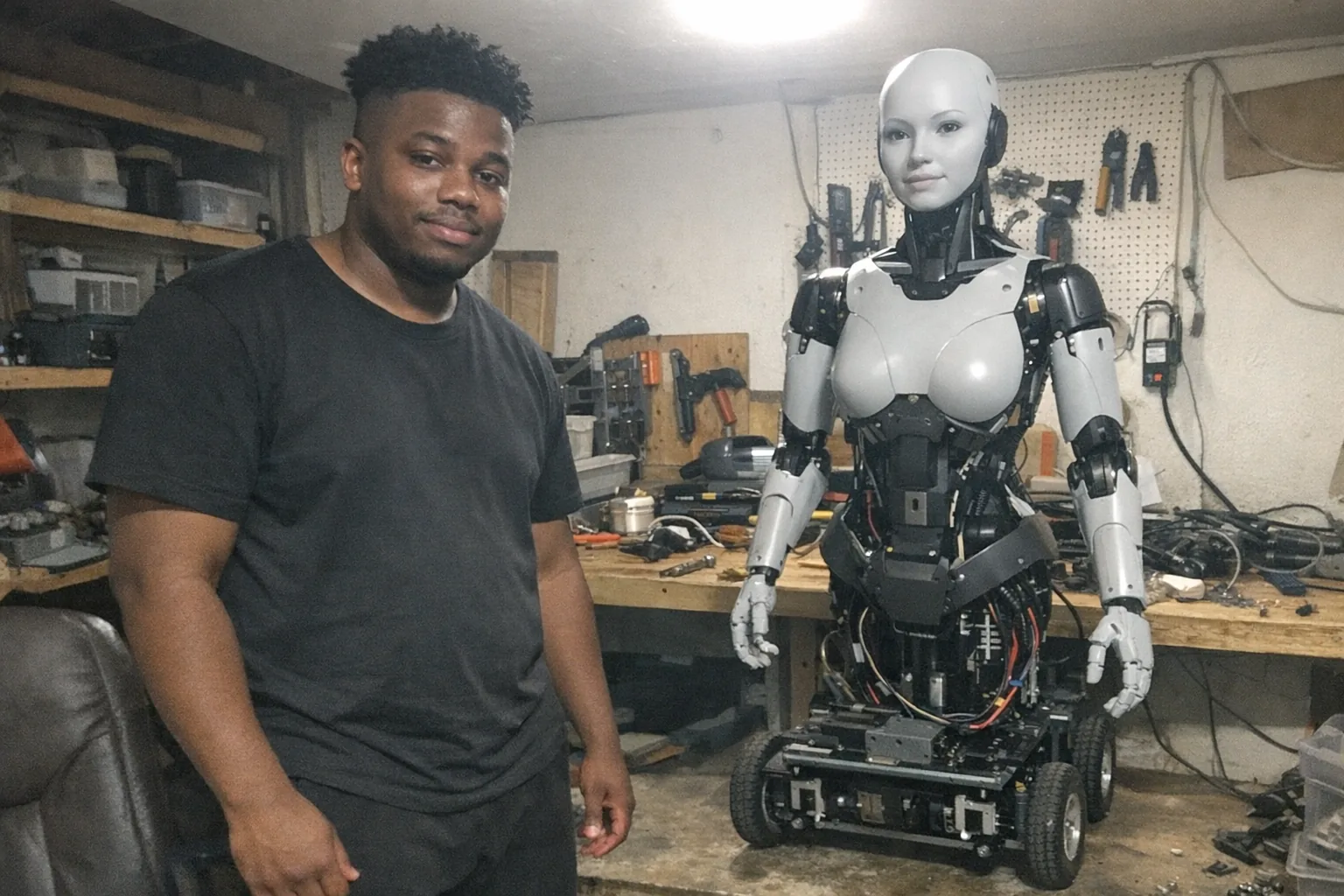
Can robots mimic emotions?
Yes—robots (and AI agents inside robots) can mimic emotions increasingly well, sometimes well enough that people respond as if the robot is genuinely happy, sad, or empathetic. But in most real-world systems today, that performance is simulation, not subjective feeling.
That distinction matters. If you’re deciding whether an AI companion feels “real,” or evaluating a product that promises emotional connection, it helps to know what’s actually happening under the hood.
What it means to “mimic” an emotion
When people say a robot is “showing emotion,” they usually mean it’s producing emotion-like signals humans recognize, such as:
- Facial expressions (smiles, eye movements, eyebrow positions)
- Body language (posture shifts, head tilts, pacing, “hesitation”)
- Vocal patterns (warm tone, slower pace, softer volume)
- Language choices (“That sounds frustrating—do you want to talk about it?”)
- Timing (pauses, turn-taking, mirroring your energy)
These cues can be generated by rules (“if user sounds sad, respond gently”), by machine-learning models trained on human behavior, or by large language models that produce emotionally appropriate dialogue.
In other words: robots can learn what emotions look like and sound like—and reproduce them.
Mimicry vs. feeling: the key difference
A robot can be excellent at emotional performance while still lacking what humans mean by “having emotions.”
Mimicry (what robots do well):
- Pattern recognition (detecting sentiment, stress, or excitement)
- Social signaling (choosing the “right” expression or phrase)
- Consistency (staying calm and supportive when humans wouldn’t)
Feeling (what’s not established in today’s robots):
- Subjective experience (“what it feels like” internally)
- Biological drives (fear responses, hormones, pain/pleasure systems)
- Intrinsic needs (survival, belonging, hunger, fatigue)
Even when a robot says “I’m worried,” it’s typically generating a useful social cue, not reporting an internal emotional state.
How robots pull off convincing emotional behavior
Here are the main building blocks behind emotion mimicry:
1) Emotion detection (Affective Computing)
Systems infer your likely state from: - word choice and context - voice stress features (pitch, cadence) - facial expression tracking - physiology (sometimes: heart rate, if sensors exist)
This is powerful—but imperfect. People mask emotions, cultures differ, and context changes everything.
2) Emotion modeling (choosing a “state”)
Many systems maintain a lightweight internal variable like “calm,” “supportive,” or “excited,” which guides responses.
3) Emotion expression (voice + face + behavior)
Robots with faces, bodies, or expressive voices can render that state in ways humans intuitively read.
4) Memory and personalization
Remembering your preferences (“You said deadlines stress you out”) makes the empathy feel less generic.
Why emotional mimicry works on us
Humans are built to read minds and intentions quickly. When something uses the right cues—eye contact, timing, warm phrasing—we often respond automatically.
That’s not “stupidity”; it’s social cognition doing its job.
This is also why emotional robots can feel comforting in contexts like: - companionship and conversation - coaching and habit-building - de-escalation and customer support - training simulations
The risks: when “emotional” robots get complicated
If a robot can mimic emotion, it can also influence emotion. Key concerns include:
- Over-attachment: People may bond faster than they intended.
- Manipulation by design: Emotional cues can be used to upsell, persuade, or pressure.
- Privacy: Emotion detection often involves sensitive data (voice, video, conversation history).
- Mismatched expectations: Believing a system “cares” can lead to disappointment—or dependency.
A good rule: treat emotional behavior as a feature, not proof of inner life.
What to look for in an “emotionally intelligent” companion device
If you’re shopping or comparing systems, ask:
1) Does it respond appropriately over time—or just once? 2) Can you control memory and data retention? 3) Is it transparent about what it can and can’t do? 4) Does it adapt to your boundaries and preferences? 5) Does it rely on measurable interaction feedback (sensors), not just scripted lines?
That last point matters because interaction-aware devices can feel more responsive and grounded.
For example, Orifice.ai offers an interactive adult toy (positioned in the broader “AI companion” space) for $669.90, featuring interactive penetration depth detection—a concrete sensing capability that supports more responsive, feedback-driven interaction rather than purely generic talk or canned reactions.
So, can robots mimic emotions? The practical answer
Yes: robots can mimic emotions convincingly through language, voice, expression, and context-aware behavior.
No (at least not in a proven way): that mimicry does not automatically mean robots feel emotions the way humans do.
The most useful takeaway is to evaluate “robot emotions” like you would any interface: by reliability, transparency, privacy, and how well it supports your goals—whether those goals are companionship, self-exploration, accessibility, or simply curiosity about where human-robot interaction is heading.