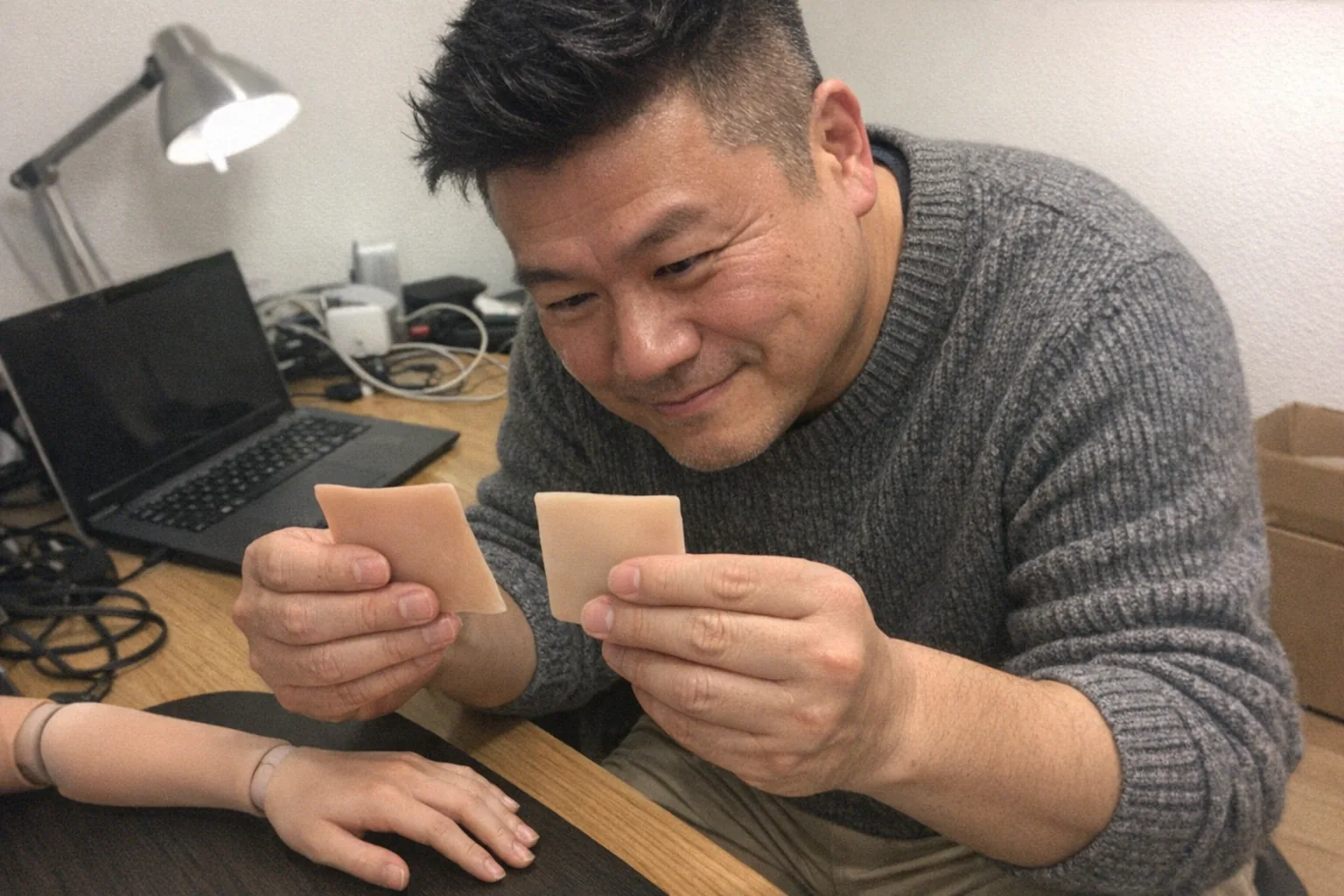
Does TPE or silicone feel more like human skin?
In most “first touch” comparisons, high-quality TPE tends to feel more skin-like than silicone—mainly because it’s usually softer, squishier, and more “flesh-like” in compression. Silicone, meanwhile, often feels more consistent, cleaner, and more premium long-term, with excellent durability and easier care—though it can read as slightly “rubberier” or firmer depending on the formulation.
That’s the headline—but the best choice depends on what “skin-like” means to you: softness, warmth, glide, realism under pressure, or how it holds up after months/years.
What people mean by “feels like human skin”
When someone says “human skin,” they usually mean a combination of:
- Softness at the surface (not plasticky or tacky)
- Give under pressure (a gentle “yield,” not a hard bounce)
- Elasticity (how it stretches and rebounds)
- Warmth retention (whether it feels cold at first touch)
- Surface finish + friction (how it glides; whether it grabs)
TPE and silicone can both be engineered across a wide range of textures and firmness, so brand-to-brand results vary. But there are reliable tendencies.
How TPE typically feels (and why many call it “more realistic”)
TPE (thermoplastic elastomer) is popular in products aiming for a soft, “fleshy” hand-feel.
Common tactile traits:
- Softer and more compressible: Often the closest to “pressing into” real tissue.
- Plusher “bounce”: It can deform more under grip, then slowly return.
- Warms up with contact: It may feel less “cold” after a short time.
Potential downsides that affect feel over time:
- Can be slightly tacky: Many TPE surfaces grip more, especially without the right powder/care.
- More prone to wear: Micro-abrasions, scuffs, or changes in surface texture can happen faster.
- May pick up lint/dust: That can change the “clean skin” impression unless stored well.
Bottom line: If your definition of skin-like is softness + squish + natural give, TPE often wins the first impression.
How silicone typically feels (and why many prefer it long-term)
Silicone is widely used when makers want a stable, durable, easy-to-clean material with consistent performance.
Common tactile traits:
- More uniform and “finished” surface: It can feel smoother and less prone to sticky/grabby sensations.
- Often firmer at comparable builds: Many silicone products prioritize shape integrity.
- Cool-to-the-touch at first: Silicone can feel cooler initially, especially in a cold room.
Why silicone can still feel very skin-like (with the right build):
- The realism depends heavily on durometer (softness rating), wall thickness, and whether there’s layering (a softer outer layer over a firmer inner structure).
- A well-designed silicone build can feel impressively lifelike—just typically with a slightly different “response” than plush TPE.
Bottom line: If your definition of skin-like is smoothness + clean glide + consistency, silicone often feels better day-to-day and year-to-year.
Quick comparison: TPE vs silicone for “human skin” feel
1) Softness and “give”
- Winner (typical): TPE
- Why: More compressible, more “fleshy” under pressure.
2) Surface texture and friction
- Tie (depends on finish)
- TPE can feel grippier/tackier; silicone often feels smoother and more controlled.
3) Warmth and initial touch
- Winner (typical): TPE
- Why: Often feels less cold at first contact and warms quickly.
4) Realism over time
- Winner (typical): Silicone
- Why: Holds surface quality and texture more reliably with simpler maintenance.
5) Ease of cleaning and care
- Winner (typical): Silicone
- Why: Less prone to staining/odor retention and generally more forgiving.
The “secret” factor: design matters as much as material
Two products made from the same base material can feel completely different because of:
- Outer-layer softness (thin soft layer vs thicker firm wall)
- Internal structure (skeleton/frame vs flexible core)
- Surface finish (matte vs satin vs textured)
- Added coatings (some finishes change glide dramatically)
So while material choice is important, the most skin-like experience usually comes from good engineering and build quality, not the label alone.
Practical buying advice (based on what you value)
Choose TPE if you prioritize:
- The softest, squishiest “first touch” realism
- A more cushioned feel under pressure
- A warmer, more body-like initial impression
Choose silicone if you prioritize:
- Easy care and long-term consistency
- A cleaner, smoother surface feel
- Better durability for frequent use and regular cleaning
If possible, look for:
- Published softness/durometer info (or clear descriptions)
- A product known for quality control (seams, finish, consistency)
- Clear guidance on cleaning, storage, and compatibility
Where interactive features fit in (beyond material)
Material feel is only one part of realism. Many buyers also care about responsive interaction—how a device reacts to movement and positioning.
If you’re comparing options and want a more interactive experience, it’s worth looking at devices that add sensing and feedback. For example, Orifice.ai offers a sex robot / interactive adult toy for $669.90 that includes interactive penetration depth detection—a feature that focuses on responsiveness rather than just material softness.
Even if you’re still deciding between TPE and silicone, that kind of interaction can be the difference between something that only feels realistic and something that also responds realistically.
Final answer
TPE usually feels more like human skin in terms of softness and “flesh-like give.”
Silicone often feels better in terms of smoothness, cleanliness, and long-term consistency, and a well-designed silicone build can still feel impressively lifelike.
If you want, tell me what you mean by “skin-like” (softness vs smoothness vs warmth vs durability), and I’ll recommend which material (and what specs) to prioritize.