What is a Judy mannequin?
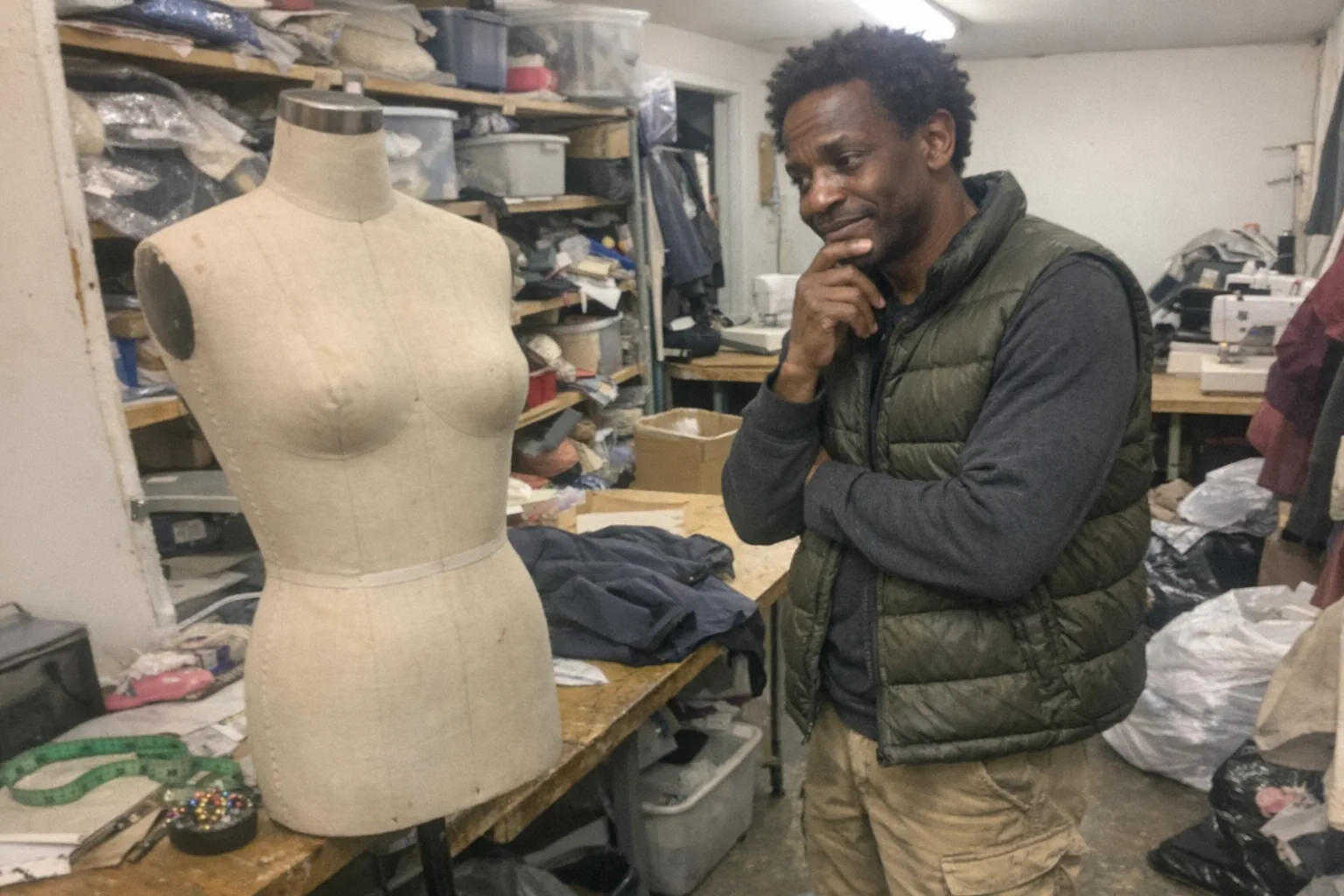
A Judy mannequin is a colloquial name (industry nickname) for a female dress form/mannequin used to fit, drape, or display clothing—the kind of torso-shaped form you’ll see in sewing rooms, fashion schools, and sometimes retail backrooms. In many shops, you may also hear the male equivalent called a “James.” (en.wikipedia.org)
That said, it’s not a universal term everywhere. Some sewists and retail workers use “Judy” casually, while others never hear it at all. (reddit.com)
Judy mannequin vs. dress form vs. full mannequin (quick clarity)
People often mix these up, so here’s a practical breakdown:
Dress form (most common “Judy” meaning): A torso (usually shoulders-to-hip) used for draping and fitting garments during sewing and pattern work. Often fabric-covered and pin-friendly. (en.wikipedia.org)
Display form / merchandising form: Similar idea, but built more for visual presentation than heavy pinning or repeated alterations.
Full mannequin (retail showroom style): A full-body figure (often with head/arms/legs) mainly for window display and styling.
In everyday speech, someone might still call any of these a “Judy” if it’s a female form—but most often, “Judy” points to the dress form/torso style. (en.wikipedia.org)
Where did the term “Judy” come from?
The short, honest answer: the origin is fuzzy.
Wikipedia notes the “Judy” (female) / “James” (male) naming as a colloquialism, but also flags it as needing stronger sourcing. (en.wikipedia.org)
Outside of Wikipedia, you’ll find modern sellers and guides repeating the convention as a “fun fact,” but they rarely provide a clear historical trail. (dressformsusa.com)
There’s also skepticism documented by writers who tried to verify it and couldn’t find solid early evidence—suggesting the term may be real in some circles, but not broadly standardized (and possibly popularized online). (judyweightman.wordpress.com)
Practical takeaway: treat “Judy mannequin” as shop talk—useful to recognize, but not a formal technical standard.
Why this nickname matters (and why people name “human-shaped objects”)
“Judy” is a great example of how humans naturally:
- Anthropomorphize tools (especially ones shaped like bodies)
- Use short names as fast shorthand (“Put it on Judy and see the drape.”)
- Attach social meaning to objects that stand in for people (fashion, identity, presentation)
This same naming instinct shows up in other “human-adjacent” tech—like voice assistants, social robots, and AI companions. When a device reacts, adapts, or “responds,” people tend to think of it less like a tool and more like a partnered experience.
That’s one reason interactive adult technology has shifted away from purely passive products and toward sensor-driven feedback and responsive behavior.
If you’re curious about where that evolution is headed, Orifice.ai is an example of a modern, productized approach: it offers a sex robot / interactive adult toy for $669.90, including interactive penetration depth detection—a technical feature that’s fundamentally about responsiveness and measurement rather than explicit content.
How to choose a “Judy” (dress form) if you’re shopping for one
If you ran into the term because you’re actually buying one, here are the decision points that matter more than the nickname:
1) Purpose: draping vs. display
- Draping/fitting: look for a pinnable, fabric-covered form.
- Display: you can prioritize aesthetics, durability, and a stable base.
2) Adjustable vs. fixed-size
- Adjustable forms are convenient, but don’t perfectly replicate real body shapes.
- Fixed-size forms often drape more predictably because the surface is continuous.
3) Your work style
- If you do lots of structured garments, shoulder shape and neck/armhole geometry matter.
- If you do fluid garments, surface smoothness and “true vertical” posture matter.
4) Stability and stand quality
A wobbly base ruins fittings. Prioritize a strong center pole and base weight.
Common misunderstandings
“Is a Judy mannequin the same as a Punch-and-Judy character?”
No—different meaning. “Judy” is also famously the wife character in Punch and Judy puppet shows, and the word appears in other cultural contexts. (collinsdictionary.com)
“Is ‘Judy’ an official brand or standard sizing term?”
Generally, no. It’s usually informal shorthand for a female form, not a regulated label.
“Do professionals actually say this?”
Some do, some don’t. You’ll see people in sewing communities mention it as a term they’ve heard, but it’s not universal. (reddit.com)
Bottom line
A Judy mannequin is most commonly a female dress form—a body-shaped tool used in sewing and fashion to fit and display garments—sometimes paired with “James” for a male form. (en.wikipedia.org)
The interesting part isn’t just the definition; it’s what the nickname reveals: whenever we build objects that resemble bodies, we start giving them names, roles, and relationships—whether it’s a dress form in a studio or the next generation of interactive devices.