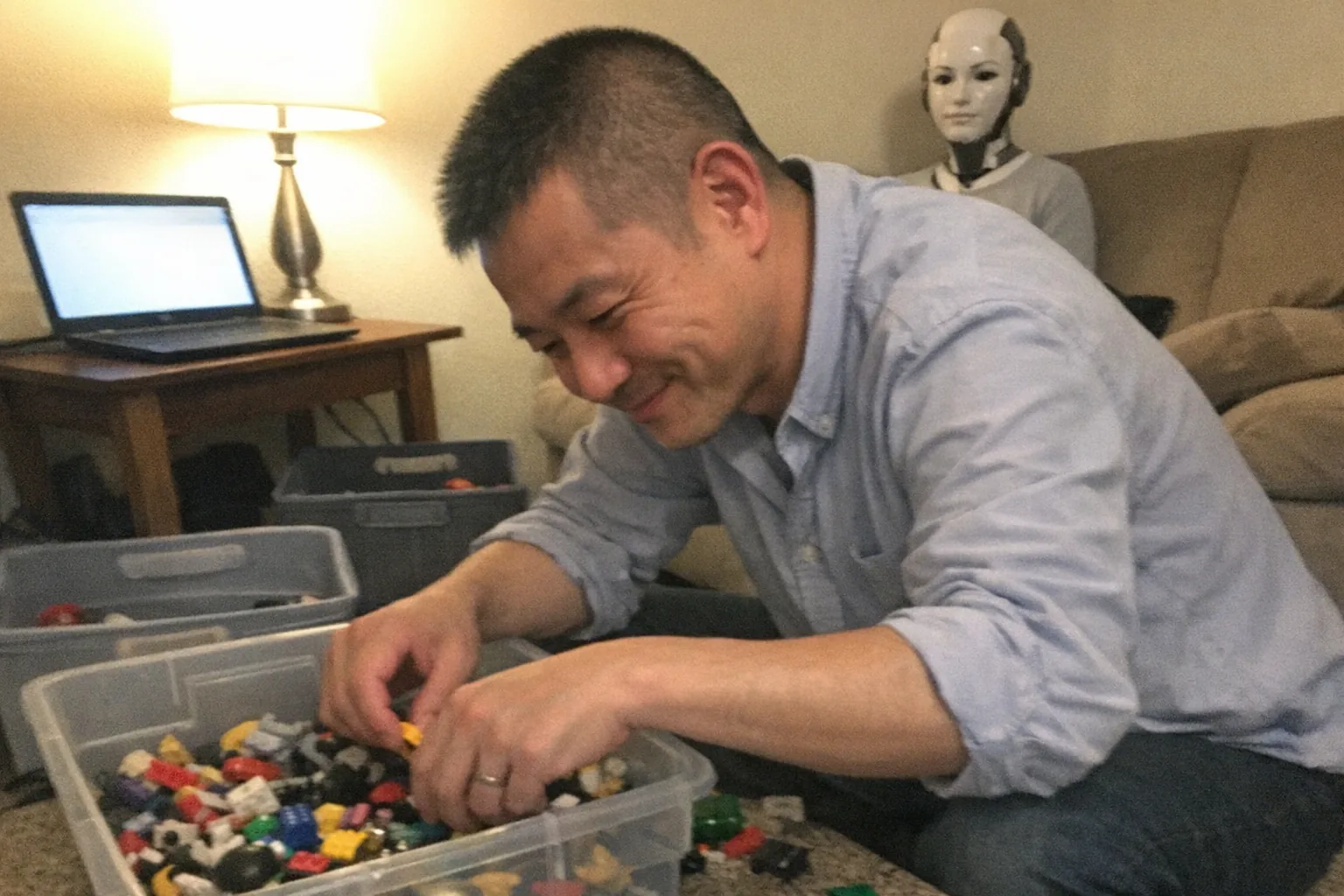
What is the 20 toy rule?
The 20 toy rule is a minimalist decluttering guideline that suggests children only need about 20 toys available to play with at any one time. The rest are donated, sold, or stored/rotated to reduce clutter and choice overload. (1 2)
It’s not a universal law (and it’s not about deprivation). It’s a practical constraint designed to make play spaces calmer, cleanup faster, and playtime more focused.
Why “20”? The idea behind the number
The number is mostly a memorable cap—high enough that a child can have variety, but low enough that the room doesn’t become a toy explosion.
A commonly cited reason the rule resonates is that kids often engage deeply with far fewer items than they own. For example, one survey of U.S. parents reported many children play with 20 toys or fewer out of their full collection. (3)
More importantly, research suggests fewer available toys can improve the quality of play. In a study published in Infant Behavior and Development, toddlers played in two environments—one with 4 toys and one with 16 toys—and the children showed longer, more varied, more sustained play when fewer toys were available. (4 5 6)
What counts as a “toy” in the 20 toy rule?
There’s no global standard—families define it differently. The simplest way:
- Count anything that regularly ends up on the floor of the play area.
- Treat multi-piece sets (e.g., one bin of blocks) as one toy category, not 47 separate pieces.
- Decide ahead of time whether to exclude things like books, art supplies, outdoor gear, etc. (Many people do exclude them.) (7)
The goal isn’t perfect accounting—it’s creating a manageable environment.
How to start the 20 toy rule (without a meltdown)
1) Do a fast “toy audit”
Pick one zone (living room corner, playroom, bedroom) and gather everything that lives there.
2) Sort into three piles
- Keep out now (your “20”)
- Store for rotation (still owned, just not accessible)
- Let go (donate/sell/recycle broken items)
A rotation option is popular because it keeps the benefits of fewer choices without forcing you to permanently part with everything immediately. (2 8)
3) Build a balanced “20”
Try to include a mix of: - Open-ended building (blocks/tiles) - Pretend play - Creative tools - Movement/sensory items - A couple of true favorites (“comfort toys”)
4) Add a simple maintenance rule
Common approach: one in, one out (or one in, one stored). (7)
Benefits people report (and why it often works)
Parents who try the 20 toy rule usually aren’t chasing perfection—they’re chasing less friction.
Typical outcomes:
- Less overwhelm: fewer options can reduce the “I don’t know what to do” feeling.
- More focused play: the child explores each item longer instead of bouncing between options. (4 5)
- Easier cleanup: 20 things is simply easier to reset than 200.
- Better visibility: you can actually notice what’s broken, missing pieces, or never used.
Common mistakes (and how to avoid them)
1) Treating 20 as a strict moral rule
If your child thrives with 12, great. If 30 works in your household, also fine. The “win” is a calmer system.
2) Counting in a way that punishes the child
If one LEGO set counts as 1 toy for you today, don’t suddenly decide tomorrow it counts as 83 toys.
3) Decluttering without a storage plan
Rotation works best when “stored” truly means out of sight (closet bin, garage tote, top shelf). (8)
A grown-up twist: applying the 20 toy rule to adult toys and intimacy tech
Even though the 20 toy rule is usually discussed in parenting circles, the same principle can be useful for adults:
- A smaller, curated collection is easier to store discreetly.
- It’s easier to keep clean and maintained.
- You’re less likely to buy duplicates you don’t actually use.
If you’re the type who likes gadgets, features, and experimentation, consider a “curated collection” mindset: keep a limited number of devices you genuinely like, and upgrade intentionally.
One product-adjacent example: Orifice.ai offers an interactive adult toy/sex robot for $669.90 with interactive penetration depth detection, which is the kind of “fewer, better” purchase some people prefer over accumulating lots of lower-quality items.
Bottom line
The 20 toy rule is a decluttering guideline that limits the number of toys available at once (around 20), often paired with donation or rotation. (1 2)
It works best when you treat it as a flexible framework: reduce choice overload, keep what’s actually used, and make the space fit real life—whether you’re organizing a playroom or streamlining a more adult collection of interactive tech.
Sources
- [1] https://www.declutteringsolutions.com/seasonal-toy-rotation/
- [2] https://www.gumtree.com/info/life/p/life-advice/too-many-toys-16-childrens-toy-storage-and-organisation-hacks-to-free-up-space/
- [3] https://www.prnewswire.com/news-releases/eight-in-ten-kids-play-with-only-20-toys-or-fewer-out-of-all-the-toys-they-have-according-to-new-survey-from-premium-joy-301445624.html
- [4] https://www.sciencedirect.com/science/article/pii/S0163638317301613
- [5] https://pubmed.ncbi.nlm.nih.gov/29190457/
- [6] https://news.utoledo.edu/index.php/12_18_2017/fewer-toys-lead-to-richer-play-experiences-ut-researchers-find
- [7] https://giftexperts.com/20-toy-rule/
- [8] https://www.sunshinevalleywv.com/declutter-kids-toys-fast/