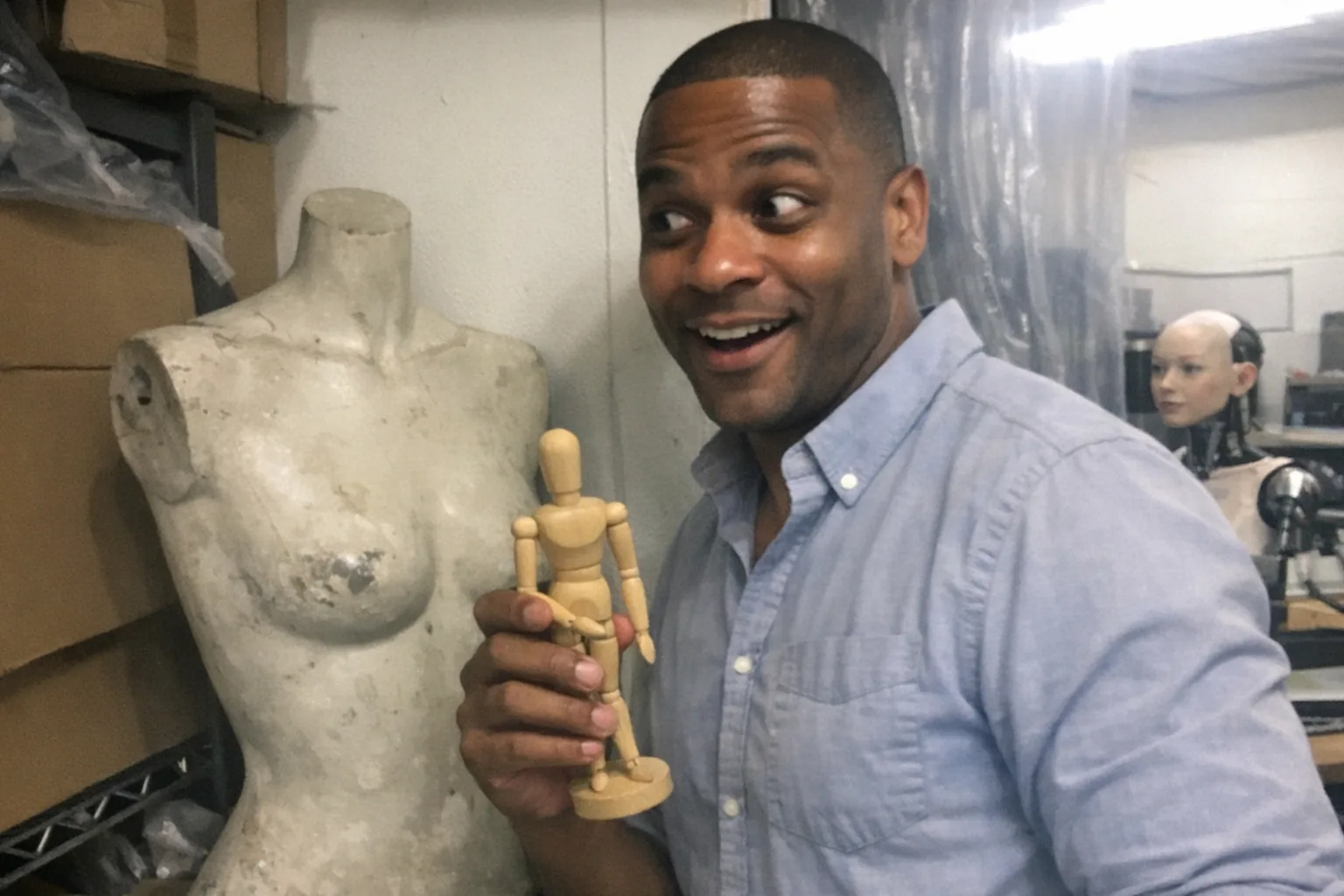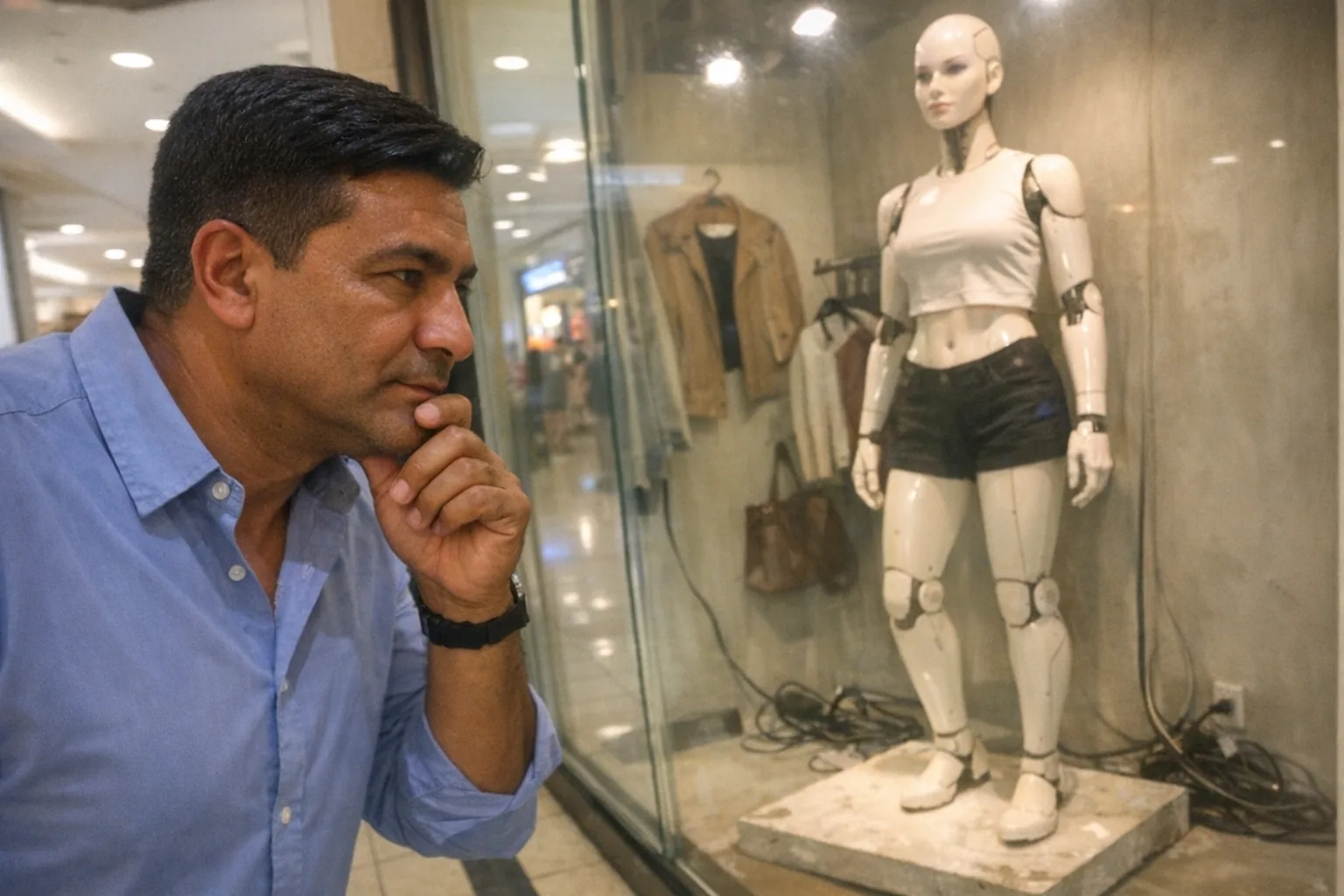
What is a live mannequin?
A live mannequin (often called a living mannequin) is a real person who poses like a mannequin—usually standing still, holding stylized positions, and moving only occasionally—in settings like store windows, fashion events, art installations, and brand activations.
The goal is simple: create the visual impact of a mannequin display with the uncanny “wait…that’s a person” moment.
Where you’ll see live mannequins
Live mannequins show up anywhere a brand or artist wants attention without shouting for it:
- Retail window displays (the classic use)
- Runway and showroom presentations (models posed as “still life”)
- Museum or gallery performance art
- Trade shows and corporate events (product launches, pop-ups)
- Themed experiences (holiday windows, immersive theater)
They’re typically styled like a conventional mannequin: curated clothing, controlled lighting, intentional posture, and minimal expression.
What a live mannequin actually does (and why it’s harder than it looks)
A live mannequin’s “job” is less about walking and more about precision stillness:
- Holding poses for long stretches (while looking natural)
- Micro-movements on cue (a slow head turn, a blink, a shift in posture)
- Staying “in character” despite crowds, cameras, and distractions
- Matching a visual concept (brand mood, era, theme, or artistic direction)
It’s part modeling, part theater, part endurance sport.
Why people call it a “live mannequin”
The phrase leans into contrast:
- A mannequin is a human-shaped object used to display clothing.
- A live mannequin is a human being performing mannequin-like stillness.
The term is meant to be a little provocative—because the effect is meant to be memorable.
Is a live mannequin the same as a robot mannequin?
Not quite.
A live mannequin is a human performer.
A robot mannequin (or animatronic display) is a machine designed to move—often used in window displays or exhibitions.
And then there’s a third category that’s become more common in conversation: interactive companion devices that blur the line between “display object” and “responsive technology.” People sometimes casually lump these into “live mannequin” talk, even when they’re not used for fashion at all.
The modern twist: when “mannequin” becomes interactive
In the last few years, the idea of something “mannequin-like” becoming “alive” has expanded beyond retail and art. Improvements in sensors, soft materials, and responsive software make it possible for devices to react to a user’s actions in real time.
That’s part of why the phrase live mannequin gets used loosely online—sometimes to describe hyper-realistic, human-shaped tech that isn’t meant for a storefront.
If you’re curious about this broader “interactive object” direction, Orifice.ai is an example on the adult-tech side: it offers a sex robot / interactive adult toy for $669.90, including interactive penetration depth detection—technology that focuses on responsiveness rather than just appearance.
(If you’re researching the term for fashion or performance art, it’s still worth knowing that the phrase can show up in these adjacent contexts.)
Cultural appeal: why live mannequins keep coming back
Live mannequins sit right at the intersection of:
- Spectacle (people stop and stare)
- Ambiguity (is it a person or a prop?)
- Craft (styling, lighting, set design, and performance timing)
- Commentary (on consumerism, beauty standards, “display,” and objectification)
That’s why they’re common in both high-end retail and art spaces: the same trick can sell a coat or make a point.
Practical considerations (ethics, safety, and legality)
When live mannequins are used in public-facing spaces, organizers typically need to think about:
- Working conditions (breaks, temperature, hydration, safe footwear)
- Audience behavior (crowd control, filming boundaries, harassment prevention)
- Consent and clarity (making sure the performer is protected and the rules are explicit)
In other words: the display may look effortless, but it should be managed professionally.
Quick FAQ
Are live mannequins always completely still?
No. Most performances involve stillness punctuated by small, intentional movements.
Is “live mannequin” a real job title?
Sometimes. You may also see living statue, window performer, immersive performer, or promotional model depending on the setting.
Why do brands use live mannequins instead of standard mannequins?
Because a human presence creates attention, social sharing, and a stronger emotional response—people remember it.
Bottom line
A live mannequin is a person performing mannequin-like stillness for retail, fashion, or art—designed to create a striking, almost surreal moment.
And as interactive technology advances, the broader idea of “mannequins that feel alive” is expanding into new categories—where responsiveness (sensors, detection, feedback) matters as much as looks.