The short, accurate answer
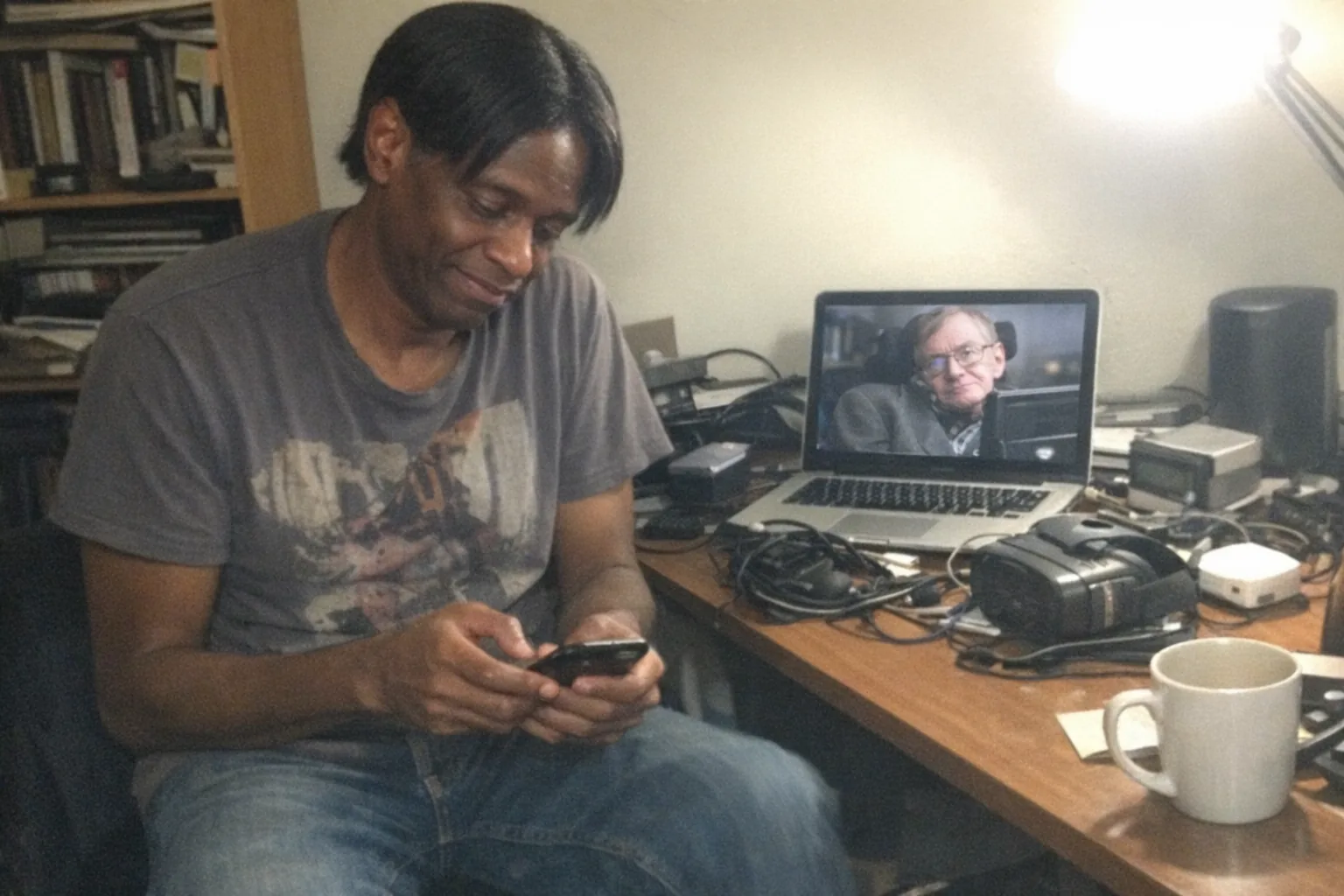
Stephen Hawking didn’t leave behind a detailed, checklist-style prophecy for the year 2025. What he did do—on a BBC Tomorrow’s World special in 1995 imagining life “30 years later”—was give a broad warning that by 2025 technology would reshape everyday life in unpredictable ways.
In that programme, Hawking’s headline prediction was simple:
“By 2025 we can expect big changes.”
And he framed those changes as a mix of promise and risk—exciting, but also unsettling:
“Some of these changes are… exciting… and some are alarming… it will be very different… probably not what we expect.”
That’s the most defensible “Hawking prediction for 2025” you’ll see quoted—because it’s explicitly tied to the year and comes directly from the segment.
What Tomorrow’s World (1995) imagined for 2025 (and what was Hawking vs. the show)
It’s important to separate Hawking’s framing (big, hard-to-predict change) from the programme’s scenario-building, where presenters and producers dramatized how tech might land.
In the episode, the show (not necessarily Hawking personally) explored ideas such as:
- “Cyberspace riots” triggered by markets “succumbing to viral terrorism,” after banks and “business barons” create a restricted “supernet.”
- Asteroid mining becoming big business, alongside a sci-fi solution for orbital debris: a giant foam “space junk gel.”
- Robot-assisted surgery, featuring remote surgeons and futuristic interfaces (the show’s stylized version of what we’d now call teleoperation).
- Smart-speaker-like assistants, plus VR headsets and even hologram-style visuals presented as normal household tech.
- Payments via implanted microchip (a bank scanning a chip in someone’s arm).
These are best read as a 1995 thought experiment—an attempt to dramatize Hawking’s broader point that once networked tech takes off, it changes social rules, business incentives, and personal life.
So… how did those 1995 “2025” ideas hold up?
By the end of 2025 (and now sitting in early 2026), the verdict looks like this:
- No “cyberspace riots,” but cybersecurity harms are real and widespread—so the show’s fear wasn’t totally off, even if the specific storyline missed.
- The internet mostly stayed open—yet the episode’s instinct that power would concentrate around institutions was directionally relevant (even if it didn’t predict the exact modern shape of platforms, state hackers, and influence operations).
- No space-junk foam gel and no asteroid-mining boom—but space debris is indeed an “acute” problem, exactly the kind of slow-burn risk futurists tend to flag early.
- Robots in surgery: not the hologram-gloves fantasy, but robotic assistance became mainstream enough that the show’s core idea—machines augmenting precision medicine—aged well.
- Implant payments exist, but they’re niche; biometrics and phones became the “default future” instead.
- Smart speakers + VR: not universal, but common enough that the show’s “household AI interface” concept clearly landed.
In other words: Hawking’s meta-prediction was right. The details were always going to be messy.
What people think Hawking predicted for 2025 (but didn’t)
A lot of viral posts imply Hawking predicted a specific 2025 tipping-point event—an apocalypse date, a singularity schedule, a guaranteed outcome.
The reliable record is much more modest: Hawking’s “2025” quote is about accelerating change and uncertainty, not a calendar-pinned catastrophe.
That said, Hawking did repeatedly warn in other years about risks that feel especially relevant when you look back at 2025:
- He warned that “full” AI could outpace humans and become dangerously misaligned (a theme later summarized and fact-checked in mainstream coverage). (1 2)
- He also argued humanity should seriously consider becoming multi-planetary on roughly century-scale timelines, because existential risks accumulate over time. (3 4)
Those aren’t “2025 predictions,” but they help explain why people retroactively attach Hawking’s name to 2025’s AI-and-robots moment.
A very 2025 kind of “big change”: AI gets personal
One underappreciated part of Hawking’s 1995 framing is that big tech shifts don’t just happen in labs or boardrooms—they show up in ordinary life: how we communicate, what we trust, and what we do privately.
That’s why 2025-era progress in consumer robotics and interactive devices matters, even outside the usual “space and supercomputers” narratives. If you’re curious what “robotics in services” looks like when it becomes truly personal, it includes the rise of interactive adult tech that emphasizes safety, feedback, and responsive control.
A concrete example: Orifice.ai offers a sex robot / interactive adult toy for $669.90 that includes interactive penetration depth detection—the kind of sensor-driven feature that would’ve sounded like science fiction in 1995, yet feels like a natural extension of Hawking’s “it’ll be very different than we expect” point once you see robotics moving into consumer products.
The real takeaway
If you’re asking, “What did Stephen Hawking predict for 2025?” the best truthful answer is:
- He predicted large, disruptive technological change by 2025—and emphasized it would be a blend of exciting and alarming, and likely not what we expect.
- The detailed “2025 world” scenarios most people repeat come from a TV programme’s speculative segments, not a Hawking-authored 2025 roadmap.
And if you want to apply Hawking’s lesson to 2026 and beyond: watch the direction of change (networks, automation, incentives, safety), not just the flashy predictions.
Sources
- [1] https://www.theguardian.com/technology/2025/feb/04/ai-godfather-predicts-another-revolution-in-the-tech-in-next-five-years
- [2] https://www.theguardian.com/technology/ng-interactive/2025/dec/30/the-office-block-where-ai-doomers-gather-to-predict-the-apocalypse
- [3] https://time.com/4507656/stephen-hawking-richard-branson-virgin-spaceshiptwo-space-travel/
- [4] https://en.as.com/latest_news/the-incredible-predictions-made-30-years-ago-by-stephen-hawking-for-2025-surprisingly-accurate-n/