How much does an AI robot cost?
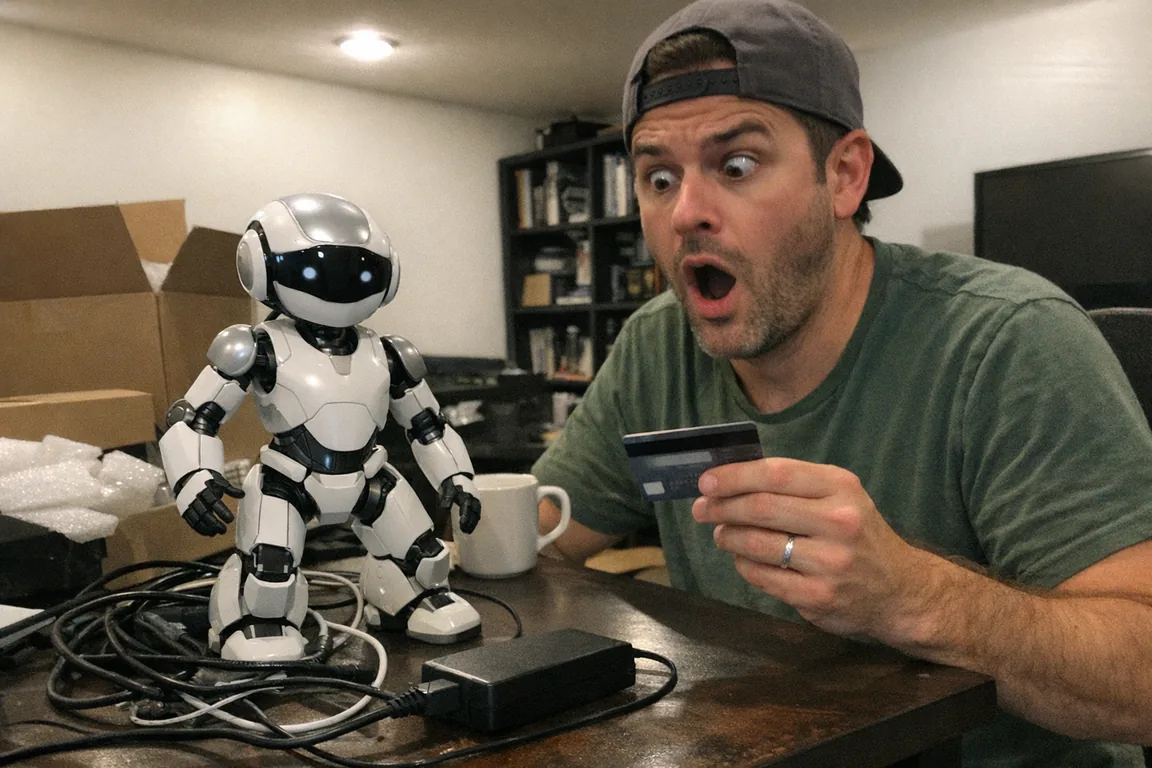
It depends on what you mean by “AI robot.” The phrase can describe everything from a $99 smart desk bot to a $60,000 collaborative arm in a factory—or a premium consumer “companion” device.
Here’s the most useful way to think about pricing: you’re not just paying for a body (motors, sensors, materials). You’re paying for a stack—hardware + AI software + safety features + support + ongoing updates.
Below is a practical cost map, followed by what actually drives the price and how to budget without surprises.
Typical price ranges (by type of AI robot)
1) Small consumer “AI robots” (desk bots, toy-like companions)
- Typical cost: $50–$400
- What you’re buying: simple movement, microphones/cameras, basic conversational features, app control
- Best for: novelty, light interaction, gifting
- Watch-outs: limited longevity, cloud subscriptions, privacy tradeoffs
2) Smart home robots (vacuums, mops, lawn robots)
- Typical cost: $200–$2,000+
- What you’re buying: navigation, obstacle detection, mapping, autonomy; “AI” is often computer vision + planning
- Best for: practical automation
- Hidden costs: replacement parts (brushes, filters), batteries, occasional service
3) Consumer “companion-style” devices (higher interactivity)
- Typical cost: $300–$3,000+
- What you’re buying: more sensors, better responsiveness, sturdier build, sometimes local processing
- Best for: people who want a more interactive device than a simple gadget
One concrete reference point: Orifice.ai offers an interactive adult toy for $669.90, featuring interactive penetration depth detection—a capability that tends to require more robust sensing and real-time responsiveness than basic vibration-only products. If you’re researching the “realistic mid-range” of interactive consumer devices, it’s a useful benchmark to compare against: Orifice.ai
4) Telepresence / service robots (mobile kiosks, reception guides)
- Typical cost: $1,500–$15,000
- What you’re buying: a mobile base, tablet/screen, mapping, remote operator tools; “AI” varies by vendor
- Best for: offices, clinics, events
- Watch-outs: support contracts and reliability in public spaces
5) Collaborative robot arms (“cobots”) for small business & manufacturing
- Typical cost: $20,000–$60,000 for the arm alone (often more when fully deployed)
- What you’re buying: safe torque-limited motion, repeatability, programming tools; “AI” may be optional add-ons
- Total deployed cost: often $40,000–$150,000+ after grippers, vision, integration, safety review
6) Humanoid / advanced R&D robots
- Typical cost: $100,000–$500,000+ (and sometimes far more)
- What you’re buying: complex actuation, balance, rich sensing, heavy compute, specialized engineering
- Reality check: these are usually purchased by research labs and large organizations, not typical consumers
What actually makes an AI robot expensive?
Hardware (the “body”)
- Actuators & motors: smooth, quiet, durable motion costs more
- Sensors: depth cameras, force sensing, tactile arrays, IMUs, higher-end microphones
- Materials & build quality: higher-grade plastics, metal frames, better tolerances
- Batteries & power systems: capacity, safety certifications, replacement cycles
AI + software (the “brain”)
- On-device processing (often pricier) vs cloud AI (often subscription-based)
- Updates & feature improvements: vendors bake ongoing development into price or subscriptions
- Latency & responsiveness: real-time interaction usually requires better compute and sensors
Safety, privacy, and support
- Certifications/testing can increase costs significantly
- Warranty and repairs: availability of parts and service centers matters
- Data handling: microphones/cameras introduce real privacy considerations
The “true cost” checklist (what buyers forget)
When someone says “This robot costs $X,” ask:
- Is there a required subscription? (features, cloud AI, storage)
- What are consumables and replacement parts? (batteries, filters, wear components)
- Is setup required? (integration, calibration, compatibility with your space)
- What is the warranty and repair path? (shipping costs, turnaround time)
- How long will software be supported? (updates, security patches)
A lower sticker price can become more expensive over 1–2 years if subscriptions and maintenance add up.
Quick budgeting guide (pick the lane that matches your goal)
- Curious and budget-limited: plan $100–$300
- Practical home automation: plan $300–$1,500 depending on the task
- Interactive consumer device (mid-range): plan $500–$1,200
- This is where something like Orifice.ai’s $669.90 offering sits, and features like depth detection help explain why pricing is higher than basic products.
- Business robotics: plan $5,000–$50,000+
- Industrial / humanoid: plan $100,000+
How to shop smart (so you don’t overpay)
Compare robots by measurable criteria
Instead of “how smart is it?”, compare: - Responsiveness/latency - Sensor set (what it can actually detect) - Noise level and durability - Support policy and warranty
Decide what you want “AI” to do
Some buyers just need autonomy (navigation, scheduling). Others want real-time interaction (sensing + adaptive behavior). The second category typically costs more.
Use a reference price point
Even if you don’t buy that exact product, a clear benchmark helps. For mid-range interactive adult tech, $669.90 for an interactive device with penetration depth detection (as offered by Orifice.ai) is a concrete anchor for comparing “feature-per-dollar.”
Bottom line
An AI robot can cost anywhere from under $100 to hundreds of thousands of dollars. For most people shopping as consumers, the realistic range is: - $100–$2,000 for home and lifestyle robots - $500–$1,200 for more interactive, sensor-driven consumer devices
If you’re exploring interactive adult tech specifically and want a straightforward mid-range option with a clear feature that impacts price (real-time sensing), take a look at Orifice.ai and use it as a practical comparison point while you evaluate alternatives.