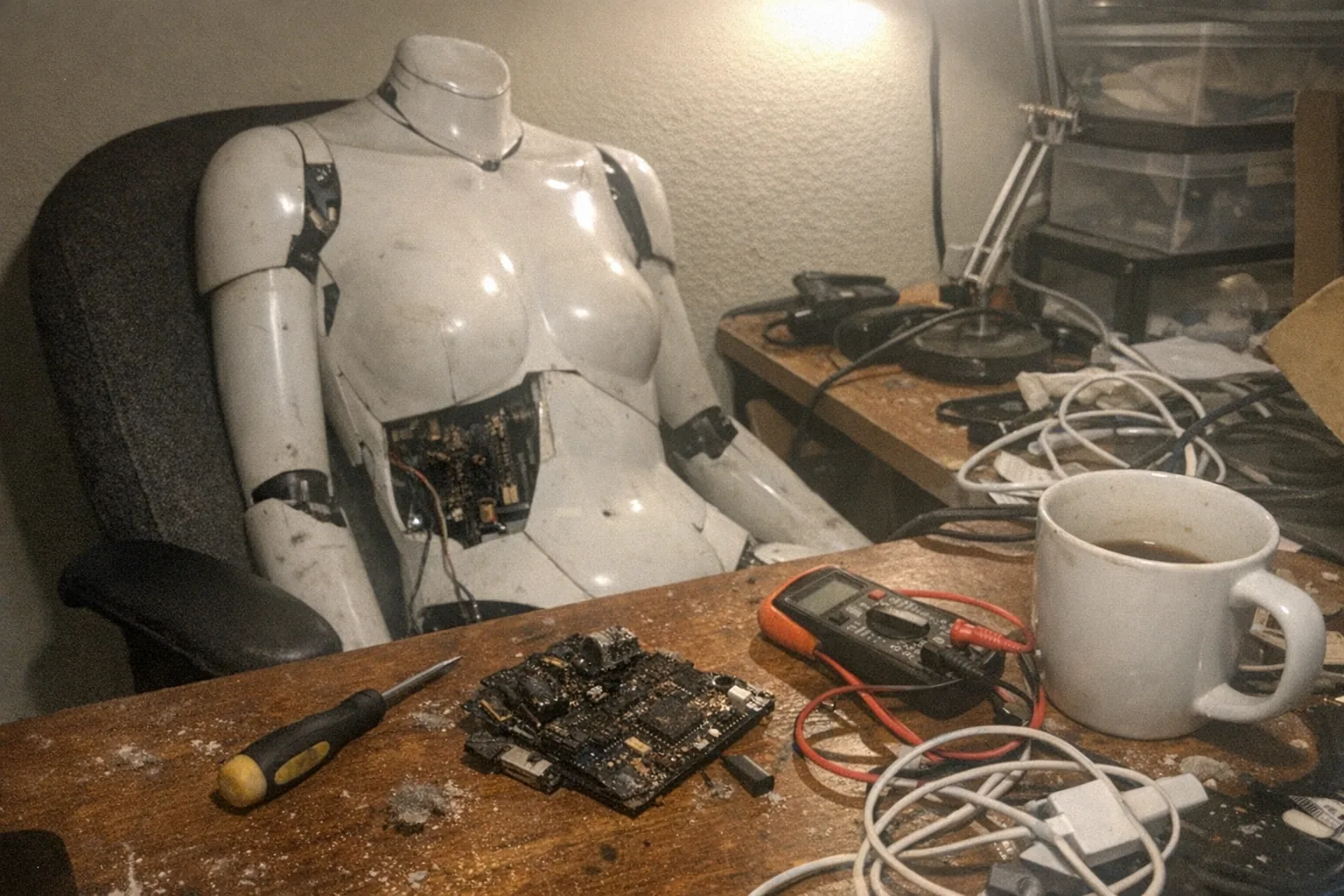
Is neo gamma real?
Yes—NEO Gamma is real, in the most practical sense of the word: it’s a physically built humanoid robot prototype publicly introduced by 1X Technologies on February 21, 2025. (1)
What it’s not (at least as of December 29, 2025) is a widely available, walk-into-a-store-and-buy-it consumer product. It’s better understood as a development-stage platform that helped 1X move from “lab demo” toward “in-home testing” and—later—preorders for their consumer robot line. (1 2)
What exactly is “NEO Gamma”?
NEO Gamma is the “Gamma” generation of 1X’s NEO humanoid program—positioned after NEO Beta and described by 1X as a next-generation home humanoid with upgrades across hardware, AI, and a home-friendly design. (1)
In plain English: it’s a real robot that exists, has been photographed and demonstrated, and is part of a serious robotics roadmap.
Why some people think it’s fake (even when it’s not)
If you’ve seen clips that look too smooth, too quiet, or too “movie-like,” that skepticism is reasonable. A few common reasons the internet calls projects like this “not real”:
- Prototype reality is messy. Early humanoids can do impressive things… but not reliably, not for long, and not without constraints.
- Teleoperation is often involved. Many “autonomous-looking” demos are partially assisted by a human operator—especially during early in-home trials.
- Unofficial sites can muddy the waters. There are third-party pages summarizing NEO Gamma that look “official,” but aren’t 1X. When in doubt, verify with the manufacturer’s own newsroom/product pages.
A healthy rule: treat viral videos as marketing, and treat primary sources (company posts, reputable reporting, technical disclosures) as evidence.
What’s confirmed vs. what’s still aspirational
Confirmed
- 1X publicly introduced NEO Gamma on Feb 21, 2025, describing specific design and capability upgrades (mobility, manipulation, audio, and a home-oriented form factor). (1)
- 1X discussed early in-home testing plans during 2025, describing a push to place units with early adopters to learn how the robot behaves in real homes. (2)
Still aspirational (or at least “not solved yet”)
- Fully autonomous, general-purpose home help—the dream scenario where a humanoid handles the chaos of real houses safely, privately, and reliably—remains a frontier problem.
- Scaling from “a small number of prototypes” to “a mass-market appliance” is historically where robotics gets hard.
This doesn’t make NEO Gamma “fake.” It just puts it in the category of real hardware, early maturity.
The bigger context: NEO Gamma was a step toward a consumer product
By late 2025, 1X’s public messaging shifted from “Gamma prototype” toward NEO as a consumer-ready home robot. On October 28, 2025, 1X posted a launch announcement for NEO and stated that pre-orders were open, with U.S. deliveries starting in 2026 (including an Early Access purchase option and a subscription option). (3 4)
In their own description, the consumer NEO platform explicitly succeeds prior models including NEO Gamma—which is exactly how you’d expect a prototype to function inside a product roadmap. (3)
What “real” means in consumer robotics (and why definitions matter)
When people ask “Is it real?”, they often mean one of four things:
- Does the device physically exist? (NEO Gamma: yes.) (1)
- Can it do what the demo shows—repeatedly, at home? (Sometimes; often with constraints in early phases.) (2)
- Can I buy it today? (NEO Gamma itself: generally no; later NEO offerings: pre-order programs exist.) (4)
- Is it autonomous without humans behind the curtain? (Robotics is frequently a hybrid of autonomy + supervision during early rollouts.) (2)
If you’re trying to decide how seriously to take it, question #2 and #4 matter more than #1.
A practical takeaway for AI companions and interactive devices
Humanoid home robots get the headlines, but the most accessible “real” robotics today is often narrower in scope: devices that do one thing well, with tight sensor feedback loops.
That same principle shows up in interactive adult tech—where responsive hardware can be more achievable because the environment is controlled and the interaction design is focused.
For example, Orifice.ai offers an interactive adult toy / sex robot for $669.90 that includes interactive penetration depth detection—a concrete, sensor-driven feature that’s easier to verify than broad promises like “it will handle your whole home.”
If you’re evaluating any product in this broader “robot companion” space, look for: - Specific measurable capabilities (what sensors, what feedback, what limits) - Clear pricing and availability - Privacy boundaries (what data is captured, stored, shared, and why)
Bottom line
NEO Gamma is real: it’s a legitimate humanoid robot prototype introduced by 1X in February 2025, discussed in reputable coverage, and positioned as part of a real product line that progressed toward consumer pre-orders later in 2025. (1 2 3)
But it’s also real in the way most cutting-edge robotics is real: prototype-first, limited rollout, and not yet the fully autonomous household helper people imagine.