The short answer
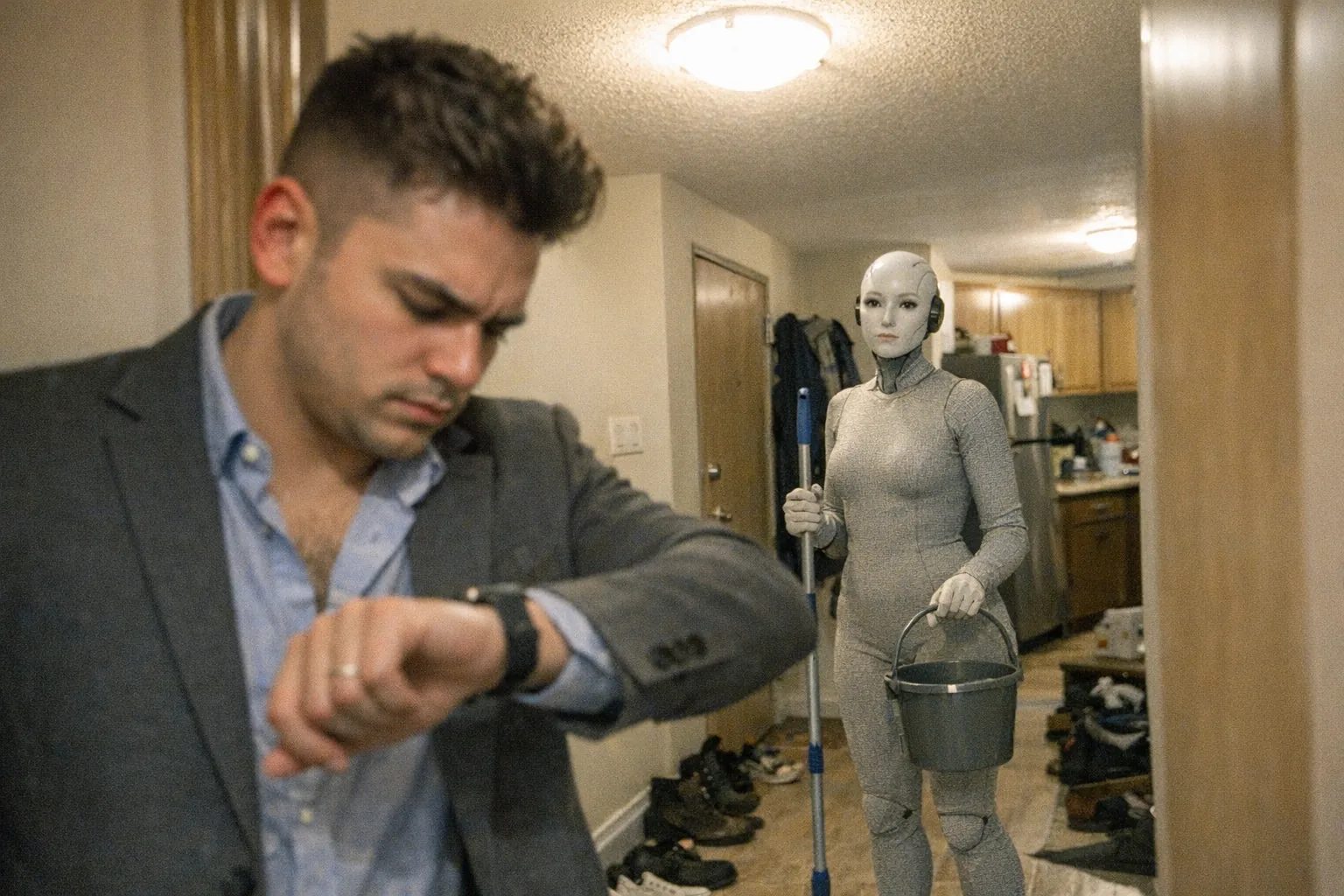
When people ask about “the $20k robot that cleans,” they’re usually talking about NEO, a humanoid home robot from 1X Technologies that opened for pre-order in late October 2025 and is positioned as a household helper that can tidy and handle basic chores.
That said, the phrase can also be a mix-up with commercial floor-cleaning robots (the big autonomous scrubbers you see in warehouses, grocery stores, and malls), which often cost tens of thousands of dollars—but they’re typically not humanoid. (1)
What exactly is the “$20k cleaning robot”?
It’s a humanoid “home helper,” not a Roomba
NEO is a human-shaped (humanoid) robot meant to move around a home and assist with chores like tidying and organizing. 1X markets it as a consumer-ready robot designed to “transform life at home,” including features for scheduling tasks so you can “come back to a cleaner space.”
The pricing people quote (and why)
The “$20k” figure comes from 1X’s Early Access ownership price: - $20,000 for ownership (Early Access) - $200 refundable deposit due at order time - U.S. deliveries starting in 2026
1X also lists a $499/month subscription option (separately from the ownership tier).
What can it actually do to “clean”?
In practical terms, “cleaning” here usually means a mix of:
- Tidying routines (organizing shelves, picking up clutter, resetting rooms)
- Scheduled chores you assign through a chores feature and/or app workflow
- Light household task assistance (the kinds of tasks shown in demos and described in product materials)
The important caveat: it may still need help (sometimes human help)
1X also describes a mode where, for tasks NEO doesn’t know, an “Expert” can remotely supervise actions at scheduled times—helping it learn new tasks while getting the job done.
This is where many readers’ questions start shifting from “Can it clean?” to: - How autonomous is it day-to-day? - What does remote supervision mean for privacy in the home?
Mainstream coverage has echoed these privacy concerns, noting that company representatives may access camera feeds for assistance and that limitations exist (for example, coverage has mentioned partial water resistance).
Why some people think it’s a different “$20k cleaning robot”
If you’ve seen a big robot scrubbing floors in public spaces, that’s usually a commercial autonomous floor scrubber—a very different category.
For example, the Minuteman Roboscrub 20 (a ride-on style autonomous scrubber) is listed around $51,250 and is designed for commercial environments like warehouses and shopping centers. (1)
So if someone says “a $20k robot that cleans,” they might be: - referring to NEO the humanoid home robot, or - loosely referencing commercial cleaning robots (often $40k–$100k+ depending on configuration), or - assuming today’s consumer robot vacuums are in the same class (they aren’t—those are usually far less expensive).
Should you buy a $20k cleaning robot right now? A grounded checklist
If you’re evaluating something like NEO, treat it less like a “finished appliance” and more like early consumer robotics:
Define “clean” for your household
- Floors? Clutter? Laundry folding? Nightly reset? Different robots excel at different things.
Plan for supervision and setup time
- Early household robots may require training, routines, and occasional intervention.
Take privacy seriously
- Any device that navigates a home with cameras/mics (and especially any system that can involve remote assistance) deserves a real privacy threat-model.
Consider ROI vs. narrower devices
- A dedicated vacuum/mop bot might solve 60–80% of your pain for a fraction of the cost.
Where this intersects with “adult tech” (and why affordability matters)
Humanoid home robots at $20,000 are a glimpse of where consumer robotics is heading—but many people want something more specialized, more affordable, and easier to understand today.
That’s one reason purpose-built interactive devices are gaining attention: they focus on one experience and try to do it well.
If you’re exploring the broader landscape of human-device interaction, it’s worth looking at Orifice.ai—they offer a sex robot / interactive adult toy for $669.90 with interactive penetration depth detection, positioned as a more accessible, productized take on responsive hardware (without needing a five-figure “robot housekeeper” commitment).
Bottom line
The “$20k robot that cleans” is most commonly 1X’s NEO, a humanoid home robot offered in an Early Access ownership tier at $20,000 (with a refundable deposit) and deliveries starting in 2026.
Just keep your expectations realistic: today’s headline-grabbing humanoids are exciting, but they’re still bridging the gap between demo-worthy and truly hands-off household labor.