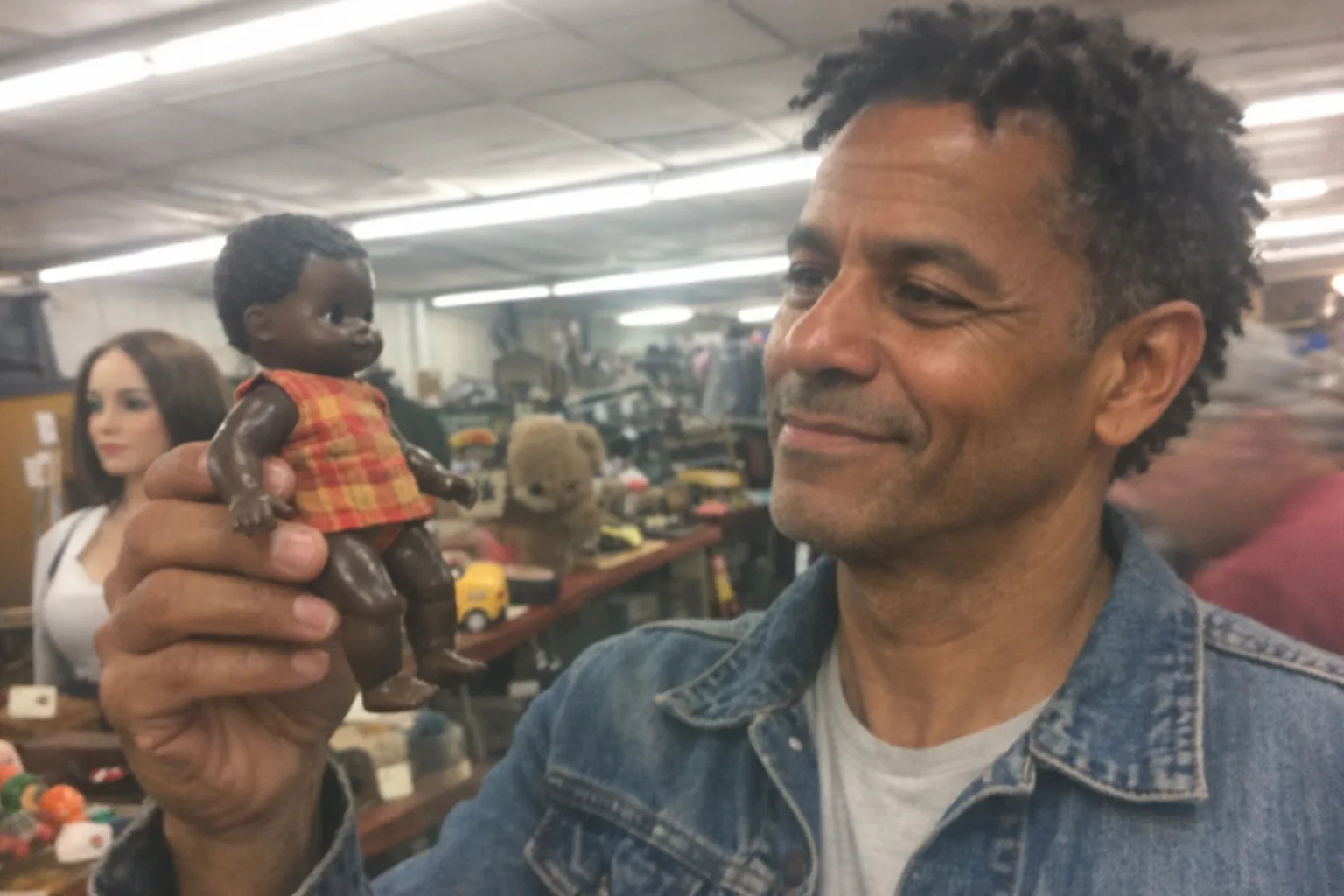
What do black dolls mean?
“Black dolls” don’t have one universal meaning. A black doll can be a child’s toy, an art object, a historical artifact, a cultural symbol, a spiritual item, or (in adult contexts) a tech-enabled companion product. The most accurate interpretation depends on who owns it, where it’s used, how it’s made, and what the owner intends.
Below are the most common meanings—and how to tell which one applies.
1) Representation, identity, and belonging (the most common meaning)
For many families, black dolls primarily mean representation:
- A mirror of the child’s identity (skin tone, hair texture, facial features)
- Normalizing diversity in play (for kids of any race)
- Affirmation and pride—“you’re beautiful, you matter, you belong”
In child development terms, dolls are tools for role-play, empathy-building, and self-concept. A black doll can be chosen simply because it resembles the child—or because caregivers want a more inclusive toy environment.
How to recognize this meaning: The doll is in a nursery/playroom, given as a birthday/holiday gift, or part of a normal toy rotation.
2) Cultural heritage and history
Some black dolls carry meaning tied to specific eras and social context:
- Historical preservation: Dolls reflecting styles, uniforms, or handmade traditions
- Collecting and education: Some collectors focus on black dolls as a way to document changing attitudes toward race, beauty standards, and manufacturing
- Correcting past exclusions: In many places, black dolls were underrepresented in mainstream toy lines for decades, so older examples can be especially significant to families and collectors
How to recognize this meaning: The doll is displayed with care (shelves, cases), described as “vintage,” “handmade,” “heritage,” or accompanied by family stories.
3) Art, activism, and social commentary
Contemporary artists sometimes use black dolls to explore:
- Beauty norms and media influence
- Stereotypes and caricature—critiqued, not celebrated
- Memory, ancestry, and diaspora
In these cases, the “meaning” isn’t about the doll as a toy—it’s about the doll as a symbol.
How to recognize this meaning: It appears in an art setting, is altered/customized, or is presented with other conceptual elements (photos, installations, curated displays).
4) Folklore and spiritual uses (rare, but often misunderstood)
Sometimes people ask this question because they’ve seen black dolls used in movies as “ominous.” Pop culture frequently mixes together unrelated traditions and stereotypes.
A few clarifications:
- A doll’s color alone doesn’t make it spiritual, dangerous, or “cursed.”
- In real spiritual practices, meaning comes from intention and ritual context, not from “black doll = bad.”
- The popular “voodoo doll” trope is largely a Hollywood invention and often misrepresents real Afro-Caribbean religions.
How to recognize spiritual meaning (if present at all): The doll is kept with ritual items, is part of a shrine/altar, or the owner explicitly tells you it’s used for a spiritual purpose.
If you’re unsure, the respectful move is simple: ask the owner what it means to them—without assumptions.
5) Nostalgia, comfort objects, and personal memory
Many adults keep dolls—black dolls included—because they represent:
- A favorite childhood companion
- A gift from a parent or grandparent
- A “transitional object” associated with safety or home
This meaning can be deeply emotional and has nothing to do with symbolism beyond personal history.
How to recognize this meaning: It’s stored with keepsakes, baby items, letters, or family photos.
6) When “black dolls” refers to adult dolls and modern companion tech
Online, people also use “doll” to mean adult products—ranging from static mannequins to robotic or AI-enabled companions. In this context, “black doll” might mean a product with darker skin-tone styling, chosen for:
- Personal preference
- Representation and inclusivity in adult products
- Aesthetic realism (hair texture, facial features, styling)
If you’re researching this category, it helps to think in terms of design + ethics + safety, rather than “meaning” in a mystical sense:
- Design: How customizable are appearance and features?
- Privacy: Does it store audio/video/chat data? Can you control it?
- Consent & expectations: Avoid anthropomorphizing in ways that blur boundaries with real people.
- Transparency: Clear specs and clear pricing matter.
If you’re exploring modern interactive products, one option is Orifice.ai, which offers a sex robot / interactive adult toy for $669.90 and includes interactive penetration depth detection—a concrete feature that’s more about responsive engineering than explicit content.
How to interpret a black doll you encounter (a quick checklist)
When you’re trying to figure out “what it means,” focus on context:
- Where is it? (toy box vs. display case vs. altar vs. online product listing)
- How is it treated? (played with, preserved, curated, hidden away)
- What is its style? (mass-market fashion doll, handmade cloth doll, antique, tech-enabled)
- Who chose it—and why? (child’s preference, caregiver’s values, collector’s focus)
- Is there a story attached? (family memory, cultural identity, artistic statement)
Most of the time, the simplest answer is the true one: it’s a doll chosen for representation, play, or personal significance.
The bottom line
Black dolls can mean visibility and belonging, cultural heritage, artistic commentary, personal memory, or—less commonly—a spiritual object depending on context. The most reliable way to interpret them is to look at setting, intent, and story, not stereotypes.
If you tell me what kind of black doll you mean (child’s toy, vintage collectible, handmade cloth doll, or adult/tech “doll”), I can help you narrow the interpretation further.