“Real” reborn doll: what people usually mean
When someone asks “How to tell if a reborn doll is real?” they typically mean one of two things:
- A true reborn (artist-finished) doll vs a factory-made baby doll that’s been lightly altered.
- A legitimate listing vs a scam using stolen photos or misleading descriptions.
A reborn isn’t “real” in the sense of being alive—it’s “real” as in authentically reborned (hand-painted, weighted, and assembled by an artist) or truthfully represented by the seller.
Quick visual checklist (fastest ways to spot authenticity)
1) Skin tone looks layered, not flat
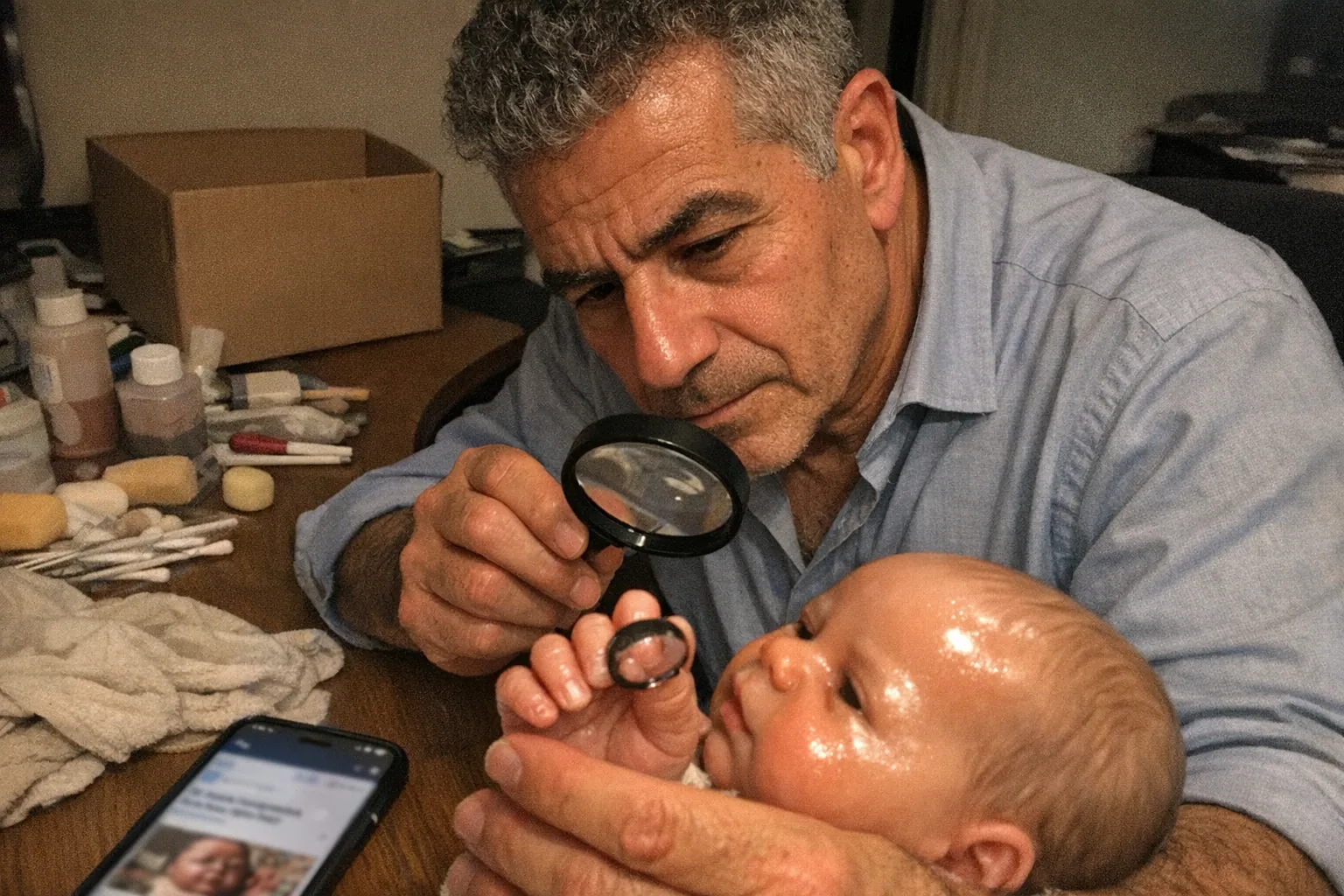
Authentic reborns are typically built with many thin paint layers (often called mottling, blushing, veining). What you’re looking for:
- Depth: subtle color variation under the surface
- Micro-details: faint veins, gentle redness around knuckles, knees, elbows
- No harsh “airbrushed mask” look across cheeks/forehead
Red flag: uniform skin color, perfectly even pink cheeks, or “one-coat” paint that looks like a toy.
2) Creases, nails, and lips have realism and imperfection
Real reborns usually show tiny inconsistencies that come from handwork:
- Nails with translucent tips, varied color, and fine cuticle detail
- Lips with soft shading, not a single solid color
- Creases shaded in a way that doesn’t repeat identically on both sides
Red flag: identical shading left-to-right, stamp-like details, or glossy “plastic” nails.
3) Hair is rooted or convincingly painted—either way it’s deliberate
Many higher-end reborns have micro-rooted hair (inserted strand-by-strand). Others use high-skill painted hair.
Look for:
- Rooting direction that makes sense (crown pattern, natural flow)
- Hairline irregularity (real hairlines are rarely perfect)
- Eyebrows that look like fine strokes, not a thick printed patch
Red flag: plug-doll hair (large obvious holes) or “wiggy” hairline gaps unless it’s intentionally wigged and disclosed.
Physical cues you can verify (even from a distance with the right questions)
4) Weight and balance feel “baby-like”
A true reborn is often weighted with glass beads/poly pellets and stuffed to mimic how a baby settles in your arms.
Ask the seller:
- Exact weight (in pounds/ounces or grams)
- Whether head and limbs are weighted
- Whether it has a cloth body or full silicone body
Red flag: seller can’t answer basic weighting questions or gives vague guesses.
5) Materials matter: vinyl vs silicone
Both can be “real” reborns, but they behave differently:
- Vinyl reborns: common, durable, typically cloth body with vinyl limbs/head
- Silicone reborns: often pricier; can feel more skin-like but require careful handling
Red flag: listing claims “full silicone” at a too-good-to-be-true price, with no clear proof.
6) Magnets, scent, and accessories can be clues—but not proof
Magnetic pacifiers, baby powder scent, diapers/outfits, and “hospital-style” accessories are common.
These can support authenticity, but scammers copy these cues too—treat them as supporting evidence, not the deciding factor.
Proof of authenticity: what to request
7) Certificate of Authenticity (COA)—helpful, but verify it
Some kits come with COAs from the sculpt/kit maker; artists may include their own documentation.
Request:
- Photo of the COA next to the doll (same lighting/background)
- Artist’s receipt or adoption papers (if available)
- Kit brand/sculpt name and edition info
Red flag: COA photo looks like it came from a different listing, or details don’t match the doll.
8) Ask for a custom photo/video (this defeats most scams)
The simplest anti-scam tactic:
- Ask for a fresh photo with a handwritten note showing today’s date and your chosen word (e.g., “blue tulip”)
- Ask for a short video rotating the doll under normal room light
If the seller refuses or stalls repeatedly, move on.
Listing-level red flags (how scams usually look)
9) Price is wildly low for the “claims”
While prices vary, handmade art dolls require time and skill. Be cautious if you see:
- “Full silicone reborn” at a mass-market doll price
- “Hand-rooted premium mohair” with bargain-bin pricing
10) Photos don’t match each other
Scam listings often show:
- Different backgrounds in every image
- Different skin tones/limb sizes across photos
- Cropped watermarked images (or suspiciously “too perfect” photos)
11) Vague wording that avoids specifics
Watch for:
- “Reborn style” or “reborn like” (could be a factory doll)
- No kit name, no size, no weight, no material clarity
Where to buy more safely
- Reputable reborn marketplaces / artist nurseries: typically best for authenticity
- Large marketplaces: possible to find real artists, but higher scam volume
Safer purchase habits:
- Use payment methods with buyer protection
- Save screenshots of the listing and messages
- Prefer sellers who welcome questions and provide custom verification
A grounded way to decide: “Real for what purpose?”
Many people discover reborns while looking for comfort objects, lifelike collectibles, or photography props. Others are actually looking for interactive adult products—which is a different category entirely.
If your goal is realism plus responsive interaction (rather than a purely visual/collector doll), it can help to compare options. For example, Orifice.ai offers an interactive adult toy/sex robot product priced at $669.90, featuring interactive penetration depth detection—a capability that’s fundamentally different from what a reborn doll is designed for.
That distinction can prevent disappointment (and wasted money): reborns are art dolls, while interactive devices are built around sensors and feedback.
A simple “is it real?” decision tree
Use this quick process:
- Does the listing clearly state vinyl vs silicone, weight, size, and kit/sculpt?
- If no → higher risk.
- Do the photos show layered paint details (mottling/blushing/veining) with natural imperfection?
- If no → could be factory.
- Will the seller provide a custom photo/video on request?
- If no → walk away.
- Is the price consistent with the material and claim (especially “full silicone”)?
- If no → likely misleading or scam.
Final takeaway
A “real” reborn doll is usually recognizable by layered artistry, believable weighting, clear materials, and verifiable provenance—and a “real” listing is confirmed by custom proof and a seller who can answer detailed questions. When in doubt, prioritize verification over vibes: one custom video can tell you more than a page of marketing text.